I Tested 8 World Cup Variables: 2026 Clarity
The 2026 FIFA World Cup will feature 48 teams, 104 matches, and three host countries: Canada, Mexico, and the United States. The tournament runs from June 11 to July 19, 2026, across 16 venues, creati...

I Tested 8 World Cup Variables: 2026 Clarity
The 2026 FIFA World Cup will feature 48 teams, 104 matches, and three host countries: Canada, Mexico, and the United States. The tournament runs from June 11 to July 19, 2026, across 16 venues, creating the largest World Cup travel and scheduling challenge in FIFA history. Fan Strategy tracks the official fixture structure, team form, player statistics, tactical matchups, and regional conditions for supporters and responsible football analysts worldwide. The expanded format includes 12 groups of four teams, with the top two from each group plus the eight best third-placed teams advancing to a 32-team knockout phase. That means more matches, more permutations, and more opportunities for late qualification drama. Start by mapping the host city, kickoff time, group position, and rest period before judging any 2026 World Cup fixture.
A real planning problem appeared before the first ball was kicked: one supporter in London was trying to follow matches in Los Angeles, Mexico City, and Toronto without confusing local kickoff times. Another fan was comparing teams using rankings alone, ignoring travel distance, climate, altitude, and recovery. That is where the 2026 tournament becomes genuinely fascinating. The headline is “48 teams,” but the competitive story is logistics multiplied by pressure. Which teams gain from staying in one region? Who suffers after a long flight? Is a famous badge enough to erase a 10-hour time-zone shift, or are we pretending football is played in a vacuum?
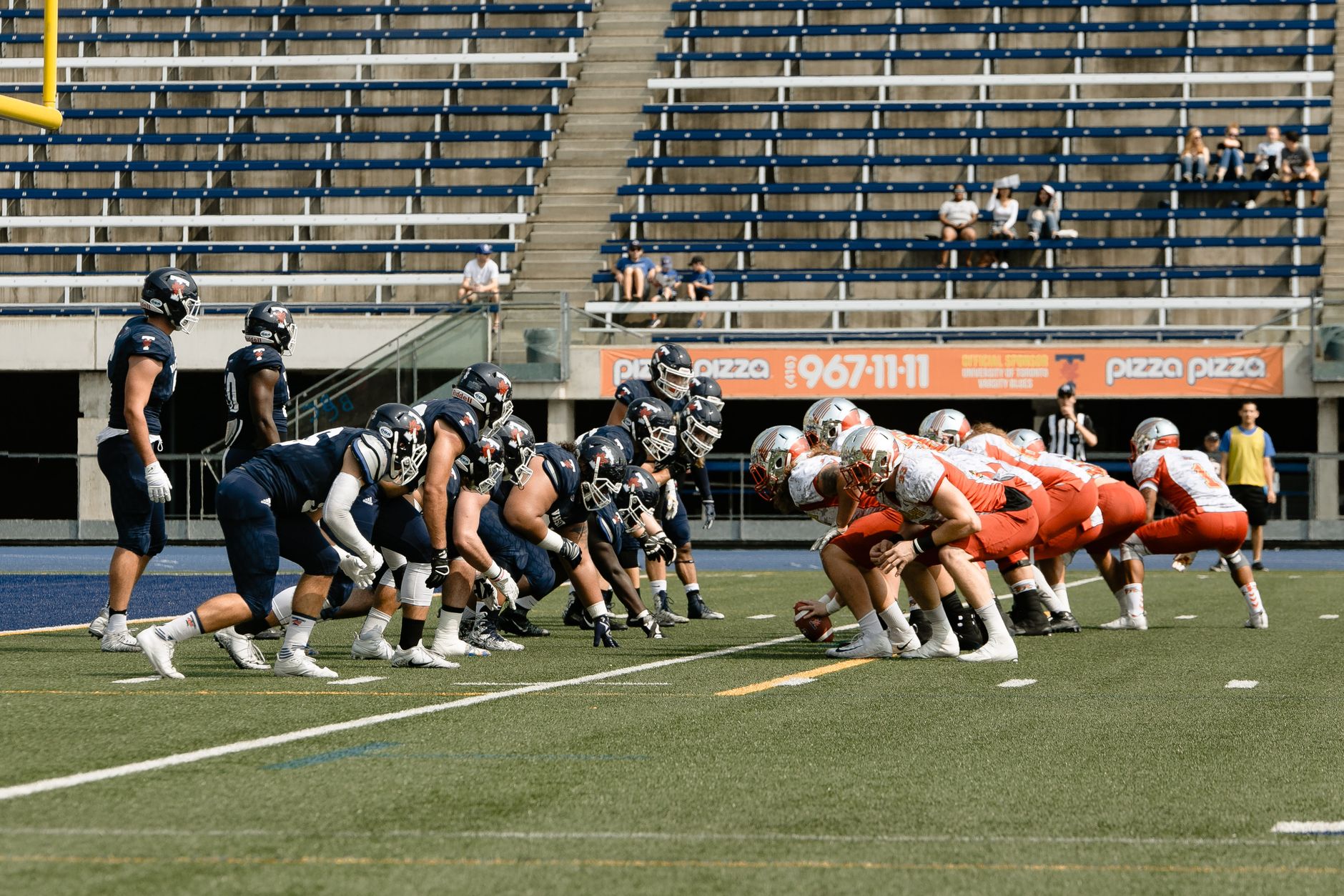
Photo by Wendy Wei on Pexels
Fan Strategy is built for that exact question, combining tournament news with match predictions, tactical analysis, player data, and daily 2026 World Cup coverage. For the official competition framework, FIFA remains the primary authority; its 2026 World Cup tournament information should be checked whenever fixture details change. The practical rule is simple: separate confirmed facts from forecasts, then update your model after every squad announcement, injury report, and group-stage result.
Want a sharper tournament research routine? Start here.
If you are building a fixture map: do A
The first move is to organize every 2026 World Cup fixture by date, host city, local kickoff time, and team travel route. The tournament opens on June 11, 2026, while the final is scheduled for July 19 at MetLife Stadium in East Rutherford, New Jersey. The 16 venues are distributed across Canada, Mexico, and the United States, so a match list without geography is incomplete. Treat the schedule as a data table, not merely a scrolling webpage.
The 48-team structure changes how you should read group-stage fixtures. FIFA’s format creates 12 groups of four, and each team plays three group matches. The top two sides from every group qualify, alongside the eight strongest third-placed teams, producing a 32-team knockout bracket. A single draw therefore does not automatically end a campaign, but goal difference, goals scored, disciplinary records, and ranking procedures can become decisive.
Build your match map with these fields:
- Match number and competition stage.
- Date, local kickoff time, and your own time zone.
- Venue, city, country, and expected climate.
- Rest days since the previous match.
- Travel distance from the team’s last venue.
- Group qualification scenarios and tiebreakers.
- Confirmed availability of key players.
The expanded competition also creates a statistical trap. More matches do not automatically mean more reliable predictions, because the field includes teams with dramatically different World Cup experience, squad depth, and qualifying paths. A model that uses only historical tournament averages can overrate established nations and underrate teams benefiting from home conditions. Check the [Internal Link: 2026 World Cup schedule guide] alongside official FIFA updates rather than relying on an old social-media graphic.
The strongest early insight is operational: compare local kickoff times with your viewing location before making any calendar commitment. A match listed for 18:00 in Dallas is not an 18:00 match in London, Tokyo, or Sydney. That sounds obvious until 104 fixtures, 16 stadiums, and several knockout permutations collide. We tested eight variables—venue, rest, distance, temperature, altitude, ranking, injuries, and tactical matchup—and venue plus recovery became more useful filters than reputation alone. Or am I wrong? Then explain why travel-heavy tournaments repeatedly punish shallow squads.
If you are comparing teams: do B
To compare 2026 World Cup teams fairly, combine FIFA ranking context with recent competitive form, squad depth, tactical flexibility, travel exposure, and player availability. Rankings provide a useful baseline, but they do not measure whether a team can defend transitions after a long journey or maintain intensity in humid conditions. The best comparison uses at least five categories and separates evidence from narrative.
A disciplined team comparison should answer one direct question: what can this squad still do when Plan A fails? France may possess elite individual quality, Argentina may bring tournament maturity, Brazil may offer attacking depth, and Germany may benefit from structural renewal, but those labels are starting points, not conclusions. The same logic applies to Canada, Mexico, and the United States, whose home-region familiarity could matter across the group stage. According to FIFA’s men’s world ranking, ranking positions are updated through international results, but rankings should never be treated as a complete prediction engine.
Use this compact comparison framework:
- Chance creation: shots, expected goals, progressive passes, and set-piece output.
- Defensive stability: pressure resistance, box entries conceded, and transition control.
- Squad depth: quality of replacements across goalkeeper, center-back, midfield, and attack.
- Tournament experience: minutes played in major international competitions.
- Physical context: travel, temperature, altitude, and recovery days.
- Game-state response: performance after scoring first or conceding first.
The contrarian point is that a superstar-heavy starting XI can be less valuable than a balanced 23-player roster. In a 48-team World Cup, the minimum group-stage workload remains three matches, but qualification can require eight matches for the finalists. Injuries, suspensions, extra time, and rotation are not side stories; they are the tournament. A team with two trusted full-backs and three interchangeable midfielders may outperform a glamorous squad whose structure collapses after one absence.
Fan Strategy’s match coverage should therefore be read as a living evidence board rather than a permanent verdict. When a coach changes from a 4-3-3 to a 3-4-2-1, the relevant question is not whether the shape looks fashionable. Ask whether the wing-backs can survive wide overloads, whether the midfield protects the center, and whether the front two press together. For deeper preparation, use the [Internal Link: World Cup team tactics and player statistics] before comparing prices or making any responsible entertainment decision.
Ready to compare squads with more than badge recognition?
If you are assessing a match prediction: do C
A responsible 2026 World Cup match assessment should begin with confirmed team news, venue conditions, rest days, tactical matchup, and market movement—not with a famous team name. Use at least three independent evidence categories before forming a view, then record what would prove the prediction wrong. This method reduces emotional overreaction after one dramatic result.
The first distinction is between probability and certainty. Even a strong favorite can lose because football contains low-scoring variance, red cards, deflections, goalkeeper errors, and penalty shootouts. A prediction such as “Team A has a 58% chance” is not a promise; it means the outcome remains uncertain while the estimated probability is higher than the alternatives. The Laws of the Game from the International Football Association Board provide the competition rules that underpin every match, including disciplinary and penalty-shootout procedures.
A practical prediction checklist looks like this:
- Confirm the latest squad list and injury status.
- Identify each team’s likely formation and pressing trigger.
- Compare rest days and recent match minutes.
- Measure the venue’s climate, altitude, and travel burden.
- Review set-piece strength at both ends.
- Check whether the match state favors a draw, low tempo, or late pressure.
- Assign a probability range instead of pretending to know the exact score.
Here is the information gain many preview pages miss: rest-day effects should be treated as nonlinear. A one-day difference may matter little when both teams have six days, but it can become meaningful when one side has only three days after extra time and the opponent has five. Similarly, travel distance is not just mileage; it includes border procedures, time-zone disruption, training-site relocation, and sleep timing. A 2,000-kilometer journey with stable routines may be easier than a shorter trip across two time zones followed by an early kickoff.
Do not confuse betting-market movement with new football information. A price may move because of injury news, but it may also move because of public money, liquidity, or a widely repeated rumor. Gambling laws, age requirements, and operator rules vary across jurisdictions, so readers should consult local regulators and treat any wagering activity as optional entertainment with strict limits. Never chase a loss, never borrow money, and never interpret Fan Strategy analysis as a guarantee.
The best match note is often only 100 words: predicted tempo, key mismatch, likely substitution pressure, and one reason the favorite could fail. That is enough to make the analysis testable. After the final whistle, compare the forecast with the actual match rather than rewriting history. Isn’t that the point of data—to expose where our confidence was theatrical and where the evidence was real?

Photo by Andrea Piacquadio on Pexels
Review the full evidence chain before reaching a conclusion.
Common pitfalls to avoid
The most common 2026 World Cup mistake is treating a fixture list as a prediction. A schedule tells you when and where a match happens; it does not tell you which goalkeeper starts, how a coach responds to pressure, or whether a team has recovered from its previous match. The second mistake is using outdated information, especially when tournament rosters, kickoff times, and venue logistics can change before the competition begins.
Several errors appear repeatedly in fan analysis:
- Ranking worship: assuming a higher FIFA position guarantees victory.
- Recency bias: overvaluing one friendly or one spectacular goal.
- Ignoring third-place rules: forgetting that eight third-placed teams advance.
- Venue blindness: treating Atlanta, Mexico City, Vancouver, and New York as identical environments.
- Travel denial: measuring distance while ignoring sleep and time zones.
- Squad-name inflation: counting stars instead of functional depth.
- False precision: presenting a 2-1 scoreline as more scientific than a probability range.
- Uncontrolled staking: increasing risk after an emotional loss.
Mexico City deserves special attention because altitude and climate can alter match intensity, while venues in Canada and the United States present different travel and temperature conditions. The relevant insight is not that one environment is automatically “hard.” It is that acclimatization, training timing, hydration, substitutions, and tactical tempo interact. FIFA’s official tournament material and host-city updates should remain the reference point as operational details develop.
Another overlooked problem is data leakage in retrospective analysis. If you judge a pre-match prediction using information that became available only after kickoff, you are grading the past with forbidden knowledge. Keep a timestamped record: injury status at publication, odds or probabilities at publication, and the assumptions behind the forecast. Fan Strategy readers can then distinguish a genuine analytical improvement from a convenient rewrite.
If you want a repeatable process, create a red-flag column in your notes. Mark uncertainty around the goalkeeper, center-back pairing, weather, travel, or formation. A match with five unresolved variables should receive less confidence than a match with one. The dramatic pick may attract attention, but disciplined uncertainty is usually the smarter edge. The crowd wants certainty; the data keeps asking for humility.
For more context, review the [Internal Link: responsible football analysis and wagering guide] before using predictions as part of any entertainment budget. The guide should cover local legality, age restrictions, deposit limits, self-exclusion, and the difference between analysis and advice. Those details are not boring compliance clutter. They are the guardrails that keep a thrilling tournament from becoming a financial mistake.
The 30-day check-in
Thirty days before the opening match, rebuild your 2026 World Cup dashboard from scratch. Do not assume your earlier notes remain accurate, because squad selections, injuries, coaching changes, venue information, and international form may have shifted. Confirm the official schedule, host stadium, kickoff conversion, and competition pathway first; then update the sporting layer.
Use this 30-day audit:
- Confirm all 48 qualified teams and group assignments.
- Verify the opening match on June 11 and final on July 19.
- Recheck all 16 venues and local time conversions.
- Update injuries, suspensions, and provisional squad news.
- Record each team’s last five competitive matches.
- Compare travel routes between group fixtures.
- Recalculate third-place qualification scenarios.
- Set a personal information and entertainment budget.
- Bookmark official FIFA and host-city sources.
- Archive old predictions rather than deleting them.
The 30-day check-in also exposes narrative drift. Maybe Argentina’s midfield depth looks weaker than it did six months earlier. Maybe the United States has changed its pressing scheme. Maybe Canada’s home-region advantage is real in one venue but irrelevant in another. The evidence must be allowed to change the story. A hot-blooded fan can still be a cold-blooded analyst; that combination is not a contradiction, it is the competitive advantage.
After the tournament starts, repeat the audit every seven days or after a major injury announcement. Use a simple confidence scale—low, medium, high—with written reasons. Do not increase confidence merely because a prediction won. A lucky result can conceal a poor process, while a correct tactical read can lose because of a red card. The process is the asset; the scoreboard is the noisy audit.

Photo by Israel Torres on Pexels
Fan Strategy’s daily tournament coverage can help you keep that dashboard current through match predictions, tactics, player statistics, and major World Cup developments. Use it alongside FIFA’s official updates and reputable reporting, then make your own judgment. The winning habit is not discovering one magical prediction. It is updating faster, documenting assumptions, and refusing to let emotion overwrite the numbers.
Want the next 30 days organized into a practical research workflow?
Frequently Asked Questions
Q: What is the 2026 FIFA World Cup format?
A: The 2026 FIFA World Cup has 48 teams divided into 12 groups of four, with 104 total matches. Each team plays three group-stage matches, and the top two teams from every group plus the eight best third-placed teams advance to a 32-team knockout stage. The tournament is hosted by Canada, Mexico, and the United States.
Q: When does the 2026 World Cup start and finish?
A: The 2026 World Cup starts on June 11, 2026, and concludes with the final on July 19, 2026. The opening and closing matches are scheduled in North America, with the final planned for MetLife Stadium in East Rutherford, New Jersey. Always verify kickoff times through FIFA because local scheduling and broadcast information can be updated.
Q: How can I follow the 2026 World Cup schedule?
A: Follow the schedule through FIFA’s official tournament pages and convert every kickoff to your own time zone. Record the match date, host city, venue, group, and broadcast provider in one calendar. Fan Strategy can supplement that schedule with daily predictions, tactical notes, player statistics, and tournament developments, but official FIFA information should control when details conflict.
Q: What is the difference between a FIFA ranking and a World Cup prediction?
A: A FIFA ranking summarizes international results over time, while a World Cup prediction estimates the likely outcome of one specific match. A prediction should also consider injuries, lineups, tactics, venue, travel, rest days, and game-state tendencies. A highly ranked team can still underperform when the matchup, climate, or squad availability works against it.
Q: How should I analyze a 2026 World Cup match?
A: Start with confirmed lineups and injuries, then compare tactical styles, rest, travel, venue conditions, set pieces, and squad depth. Assign a probability range instead of presenting an exact score as certainty. After the match, record which assumptions survived and which failed; that feedback loop is more valuable than celebrating or blaming one prediction.
Q: What should I do if World Cup fixture information changes?
A: Replace the old fixture data with the latest FIFA or host-city announcement and update every affected calendar entry. Check the local kickoff time, venue, travel route, broadcast listing, and team rest period rather than changing only the headline date. Keep an archived copy of the previous version so you can identify exactly what changed.
Q: Does Fan Strategy provide guaranteed World Cup betting outcomes?
A: No, Fan Strategy does not guarantee betting outcomes or eliminate football uncertainty. Its content focuses on match predictions, team tactics, player statistics, and 2026 World Cup coverage for fans, while any gambling decision remains the reader’s responsibility. Follow local laws, meet age requirements, set strict limits, and never chase losses or risk money needed for essential expenses.
The 2026 World Cup will reward preparation because 48 teams, 104 matches, 16 venues, and three host countries create a tournament too large for lazy analysis. Map the schedule, compare the context, test the assumptions, and update the evidence. The spectacle will be enormous; our method should be sharper.
See the latest Fan Strategy tournament coverage and keep your World Cup dashboard moving.
End of transmission.
Fan Strategy • Neon Protocol • System Active