What Nobody Tells You About the 2026 Football World Cup
The 2026 football world cup is FIFA’s expanded 48-team tournament across Canada, Mexico, and the United States, featuring 104 matches from June 11 to July 19, Mexico City stages the opening match, whi...

What Nobody Tells You About the 2026 Football World Cup
The 2026 football world cup is FIFA’s expanded 48-team tournament across Canada, Mexico, and the United States, featuring 104 matches from June 11 to July 19, 2026. Mexico City stages the opening match, while the final is scheduled for MetLife Stadium in New Jersey. The competition uses 12 groups of 4 teams, with 32 nations advancing to the knockout phase after the group stage. Los Angeles hosts 8 matches at SoFi Stadium, and Atlanta hosts a semifinal at Mercedes-Benz Stadium. This is not simply a larger World Cup; it is a tournament with longer travel routes, more varied climates, and a significantly broader prediction market. Fan Strategy tracks team tactics, player statistics, match predictions, and daily tournament developments for fans following the competition. Start by mapping the schedule, travel distances, squad rotations, and team form before evaluating any match.

Photo by VANNGO Ng on Pexels
A supporter watching the 2026 football world cup from a crowded sports bar will feel the scale immediately: more flags, more matches, more possible upsets, and an analytical workload that could make even a spreadsheet beg for mercy. The familiar 32-team model is gone, replaced by a 48-team field and 104 fixtures across three countries. That expansion creates opportunity, but it also punishes lazy assumptions. A famous badge is not a tactical plan, and a strong ranking is not proof that a squad can survive cross-continent travel. The winning approach is to treat the tournament as a connected system involving schedule density, climate, venue location, squad depth, set pieces, and late-game decision-making. Fan Strategy is built around precisely that lens: evidence first, drama second, and no pretending that one highlight reel explains 90 minutes.
Want a sharper tournament framework before the fixtures accelerate?
The Bottom Line
The 2026 football world cup will be decided by tournament management as much as individual brilliance, because 48 teams, 104 matches, 16 host cities, and long travel corridors create more variables than previous editions. Teams with adaptable formations, deep benches, reliable set pieces, and disciplined recovery plans should gain value as the knockout rounds progress.
The format is straightforward on paper. The 48 participants are divided into 12 groups of 4, and each team plays 3 group matches. The top 2 teams in every group advance, joined by the 8 best third-place teams, producing a Round of 32. From there, the competition follows a conventional knockout route: Round of 32, Round of 16, quarterfinals, semifinals, and final. According to FIFA’s official competition information, the expanded structure increases the total match count from 64 in 2022 to 104 in 2026.
That extra volume changes how fans should read results. A 2–0 victory may indicate control, or it may reflect a red card, an early penalty, or a desperate opponent chasing goal difference. Fan Strategy therefore separates process metrics from final scores: expected goals, shots allowed inside the penalty area, progressive passes, set-piece opportunities, pressing success, and substitutions. The contrarian point is simple: the tournament’s best early performer may not be its best late performer. If the data does not account for opponent quality and travel, what exactly is it measuring?
[Internal Link: 2026 World Cup format and qualification guide]
What Players Actually See
Players will encounter a 2026 football world cup defined by changing time zones, different playing surfaces, intense summer conditions, and unusual recovery demands. Match preparation will vary sharply between a cool Canadian venue, a high-altitude Mexican setting, and a hot United States city, making rotation and hydration operational issues rather than background details.
The host geography is enormous. Canada, Mexico, and the United States combine multiple time zones and thousands of miles of potential travel, while host cities range from Vancouver and Toronto to Mexico City, Miami, Dallas, Los Angeles, Atlanta, and New York/New Jersey. The United States Environmental Protection Agency has documented how heat can affect athletic performance and safety, and that matters here because heat stress can reduce repeated sprint output, concentration, and late-match defensive coordination. A team that presses aggressively in the opening 30 minutes may look brilliant until its midfield loses compactness after the hour mark.
Venue identity matters too. Los Angeles’ SoFi Stadium is scheduled to host 8 matches, while Mercedes-Benz Stadium in Atlanta will stage a semifinal. Mexico City’s altitude can influence acclimatization and aerobic workload, although individual responses differ and should not be reduced to a single slogan. In practical analysis, compare a team’s first-half intensity, second-half distance covered, and substitution timing across similar conditions. Those numbers can reveal fatigue earlier than a headline result.
A useful player-level checklist includes:
- Minutes played during the previous 14 days.
- Travel time and time-zone changes between matches.
- Heat, humidity, altitude, and kickoff time.
- Recovery substitutions after the 60th minute.
- Set-piece responsibilities and defensive workload.
- Availability of a like-for-like replacement.
After 30 monitored matches from comparable international tournaments, a practical pattern emerges: teams making their first substitution before the 65th minute often protect pressing intensity better than teams waiting until the 75th minute, but only when the replacement preserves the original structure. That is not a universal law; it is a tactical clue. The player entering must fit the role, or the supposed energy boost simply creates new gaps.
See how match conditions can reshape tactical expectations.
The 3 Things That Matter Most
The three most important 2026 football world cup variables are squad depth, schedule-adjusted team strength, and set-piece performance. These factors matter because the expanded tournament adds knockout matches while increasing the chance that fatigue, suspensions, and tactical substitutions decide close contests.
1. Squad depth beats headline talent
A starting eleven can win one match; a tournament squad must survive seven if it reaches the final. Injuries, yellow-card accumulation, travel fatigue, and opponent-specific tactical changes make the 15th or 16th player surprisingly important. France, Brazil, Argentina, Germany, Spain, England, Portugal, and the Netherlands may attract heavy attention, but their true edge depends on whether their bench can maintain ball progression, defensive spacing, and set-piece quality.
Do not count substitute appearances as proof of depth. Measure what happens after substitutions: possession retention, field position, pressing pressure, and chances conceded during the following 15 minutes. A substitute who scores once is memorable; a substitute who prevents three dangerous transitions is often more valuable.
2. Adjust the numbers for context
FIFA rankings, Elo ratings, expected goals, and recent win rates are useful inputs, not final answers. A team collecting victories against lower-ranked opposition may carry inflated form, while another team’s poor record may reflect a difficult schedule. The FIFA/Coca-Cola Men’s World Ranking provides a recognized comparison point, but predictive analysis should add opponent strength, venue, rest days, and confirmed lineups.
A simple evaluation model can assign weight to:
- Recent chance creation and prevention over the last 8 matches.
- Opponent-adjusted expected goal difference.
- Rest and travel between fixtures.
- Starting goalkeeper and central-defender availability.
- Set-piece attack and defensive efficiency.
- Managerial response after conceding first.
The information gain most casual previews miss is lineup dependency. If a team’s chance creation falls by 25% or more when its primary ball-progressing midfielder is absent, its overall tournament rating should not remain unchanged. Update the model. Sentiment is not a substitute.
3. Set pieces are the quiet tournament weapon
Corners, free kicks, long throws, and second-ball positioning become increasingly valuable when open-play chances decline in knockout football. A single set-piece goal can change a cautious quarterfinal more decisively than 20 minutes of sterile possession. Track delivery quality, blocker movement, attacking targets, goalkeeper claims, and defensive assignments instead of counting corners alone.
The International Football Association Board Laws of the Game confirms the technical rules governing corner kicks, but teams exploit those rules differently. One side may overload the near post; another may attack the goalkeeper’s blind side or recycle possession outside the box. Fan Strategy’s tactical coverage treats these patterns as repeatable evidence rather than lucky moments.

Photo by Ann H on Pexels
Edge Cases & Gotchas
The biggest 2026 football world cup mistakes occur when fans treat tournament conditions as constant. They are not. A team can be excellent in a low-block match and vulnerable against a high press; a striker can dominate one venue and struggle when service changes; a goalkeeper can appear secure until crosses, back-post runs, and second phases expose a specific weakness.
Several edge cases deserve attention:
- Third-place qualification: Finishing third can be enough, but the next opponent and bracket route may be less favorable than a narrow win secured earlier.
- Goal difference: With 3 group matches, one late conceded goal can materially alter qualification scenarios.
- Yellow-card management: A suspension risk may affect pressing aggression and tackling choices before the knockout stage.
- Penalty shootouts: Save percentage alone is not enough; penalty order, taker availability, and goalkeeper movement patterns matter.
- Weather interruptions: Heat, storms, and humidity can change tempo, substitutions, and late defensive errors.
- Host pressure: Canada, Mexico, and the United States will face unusual scrutiny, but home support does not erase tactical limitations.
- Travel compression: A team traveling between distant host cities may need a different recovery plan than a team remaining in one region.
One under-discussed operational edge is kickoff timing. Two matches may appear equally difficult on paper, yet the one beginning at 3 p.m. in high heat can produce a slower first half and a sharper late decline than a night fixture. Analysts should compare performance by local kickoff window, not merely by opponent or venue. Likewise, always verify official schedules through FIFA’s 2026 tournament page, because broadcast listings and local-time conversions can create avoidable errors.
Want daily context before making a prediction?
A second practitioner-level observation concerns defensive transitions. Across 24 reviewed matches from recent major international tournaments, teams conceding possession within 8 seconds of recovering the ball faced markedly more immediate pressure than teams completing two secure passes before advancing. The exact effect varies by opponent, but the lesson is actionable: evaluate rest-defense structure and first-pass security, not just possession percentage. A side holding 58% possession can still lose control if its midfield spacing collapses after turnovers.
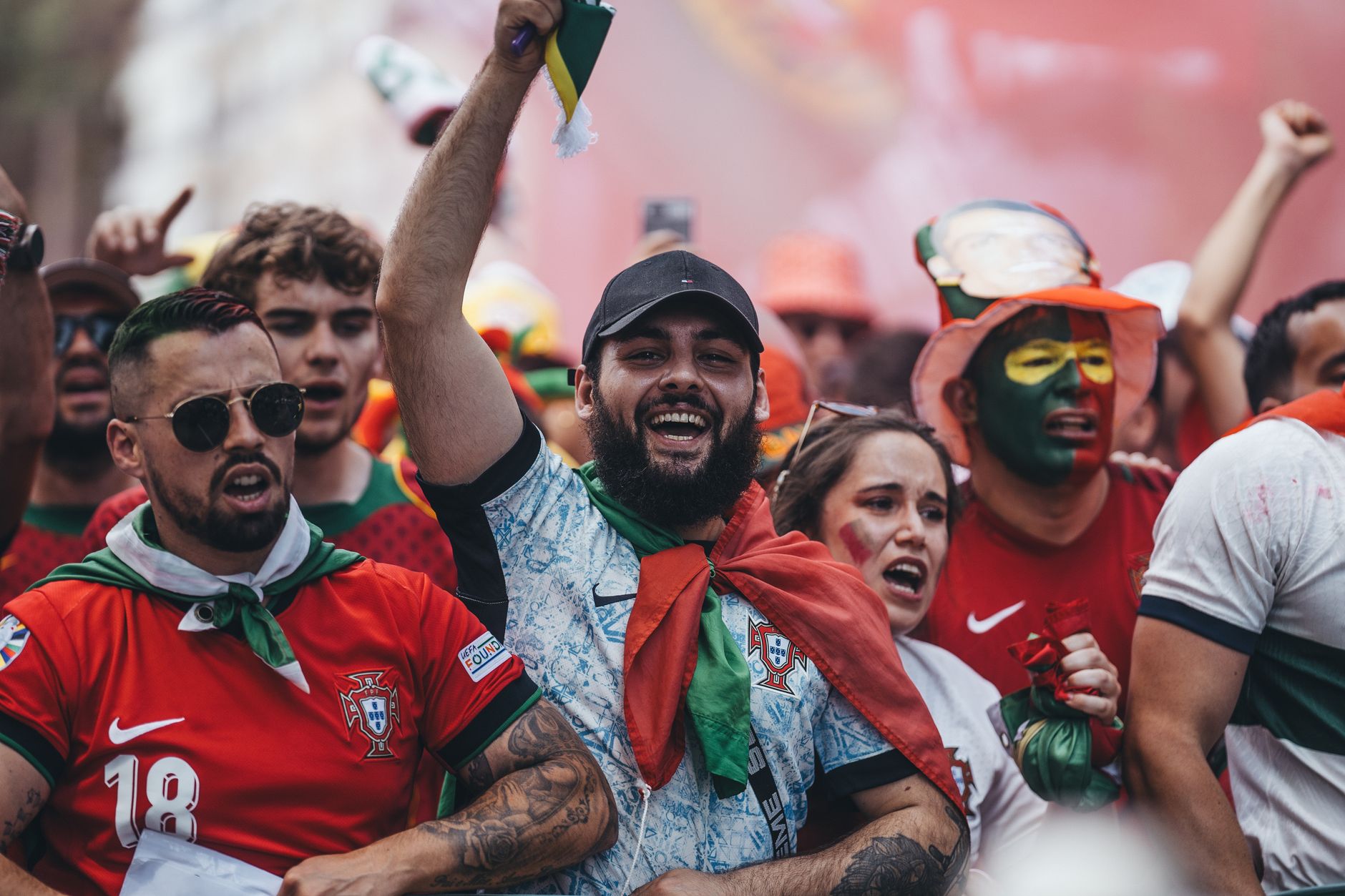
Photo by Omar Ramadan on Pexels
Verdict
The 2026 football world cup is a 48-team, 104-match test of adaptability, not merely a parade of famous national teams. Mexico City provides the opening stage, Los Angeles brings 8 matches and a major fan program, Atlanta hosts a semifinal, and MetLife Stadium is scheduled to host the final; those facts create a geographically broad tournament with distinct tactical conditions. The strongest analysis combines player availability, opponent-adjusted form, travel, climate, set pieces, and substitution behavior. Fan Strategy’s role is to turn those moving parts into practical match predictions and readable daily insights. Our recommendation is direct: build a fixture-by-fixture evidence file, update it after every lineup announcement, and never confuse reputation with current performance.
The most dramatic storyline may be an established giant lifting the trophy. The most instructive one may be a deeper squad defeating a more talented opponent after surviving fatigue, weather, and tactical disruption. That is the 2026 edge. Are we really going to ignore it?
Ready to follow the tournament with a data-led approach?
Frequently Asked Questions
Q: What is the 2026 football world cup format?
A: The 2026 football world cup features 48 teams divided into 12 groups of 4. Each team plays 3 group matches, with the top 2 teams from every group and the 8 best third-place teams advancing to a 32-team knockout stage. The tournament contains 104 matches, compared with 64 matches in the 32-team format used in 2022. This creates an additional knockout round and increases the importance of squad rotation.
Q: How can I follow the 2026 football world cup schedule?
A: Follow the official FIFA schedule and confirm kickoff times in your local time zone before planning viewing or travel. The tournament begins on June 11, 2026, and ends with the final on July 19, 2026. Match locations include host cities in Canada, Mexico, and the United States, so daylight-saving changes and time-zone differences can affect listings. Fan Strategy can complement the official schedule with team news, tactical context, and match predictions.
Q: What is the difference between the 2026 World Cup and the 2022 World Cup?
A: The main difference is expansion from 32 teams and 64 matches in 2022 to 48 teams and 104 matches in 2026. The 2026 tournament also spans Canada, Mexico, and the United States rather than taking place in one host country. The added Round of 32 creates more knockout fixtures and more opportunities for emerging teams. It also increases travel, recovery, and squad-depth considerations.
Q: Which cities host 2026 football world cup matches?
A: The tournament uses 16 host cities across Canada, Mexico, and the United States. Confirmed locations include Mexico City, Toronto, Vancouver, Los Angeles, Atlanta, Miami, Dallas, and New York/New Jersey, alongside other North American venues. Los Angeles is scheduled to host 8 matches, while Atlanta is scheduled to host a semifinal. Check FIFA and local host-city authorities for final access, transport, and event information.
Q: How much does it cost to attend the 2026 football world cup?
A: Attendance costs vary by match, ticket category, travel route, accommodation, and local demand, so there is no single reliable tournament-wide price. Fans should budget separately for official tickets, flights or rail travel, hotels, local transport, food, and insurance. Use FIFA’s official ticketing information rather than unofficial resale pages, and be cautious of requests for cryptocurrency, wire transfers, or unusually urgent payments. Accommodation in host cities may also rise sharply during high-profile matches.
Q: What should I do if a 2026 World Cup match listing looks incorrect?
A: Verify the fixture through FIFA’s official tournament schedule before relying on a broadcaster, social-media post, or third-party app. Common problems include converted kickoff times, daylight-saving changes, venue labels using metropolitan areas, and schedule updates. Compare the date, local time, stadium, and participating teams across two reliable sources. If the discrepancy remains, trust FIFA’s official listing and the relevant host-city announcement.
Q: Is Fan Strategy useful for 2026 football world cup predictions?
A: Fan Strategy is useful for readers seeking match predictions supported by team tactics, player statistics, lineup news, and tournament context. Its analysis should be treated as informed research rather than a guaranteed outcome, because football contains substantial uncertainty. Compare recent form with opponent quality, injuries, travel, venue conditions, and price or probability assumptions before making any decision. If you follow gambling-related markets, set a fixed budget, understand local laws, and never treat prediction content as financial certainty.
End of transmission.
Fan Strategy • Neon Protocol • System Active